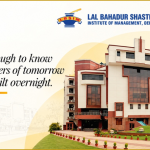
If you are preparing for CAT or XAT, the name IMI New Delhi will come up again and again on your shortlist. It is one of the oldest private B-schools in the country, its two-year PGDM costs about Rs.23.54 lakh, and its latest batch saw an average salary of Rs.18.08 LPA. In this blog, we will walk you through everything in simple words – courses, admission, fees, faculty, placements, student profile and campus life – so that you can decide if IMI is the right fit for you.
| Quick facts | |
| Established | 1981 |
| Location | Qutab Institutional Area, New Delhi |
| Flagship course | PGDM (2 years, full-time) |
| Exams accepted | CAT, XAT, GMAT |
| Total academic fee | Rs.23.54 lakh (2026–28 batch) |
| Average package | Rs.18.08 LPA (2024–26 batch) |
| Last date to apply (2027–29) | 19 December 2026 |
About IMI New Delhi
International Management Institute (IMI), New Delhi was set up in 1981. It is often called India's first corporate-sponsored business school, as it was started with the support of Indian industry rather than the government. In its early years, it worked in collaboration with IMI Geneva (now part of IMD, Switzerland), which gave it a global outlook from day one.
The campus sits at B-10, Tara Crescent, Qutab Institutional Area in South Delhi – a green, quiet pocket close to the Qutub Minar. Over the years, IMI has grown into a group of three campuses: New Delhi (the flagship), Kolkata and Bhubaneswar. This blog focuses on the New Delhi campus.
Approvals and accreditations
IMI Delhi holds a strong set of national and international approvals:
- AICTE approved two-year PGDM programmes
- AACSB (USA) – the top global accreditation for business schools
- AMBA (UK) – Association of MBAs
- NBA – National Board of Accreditation, India
- AIU – Association of Indian Universities, which treats the PGDM as equivalent to an MBA
In simple terms, your PGDM from IMI is accepted as an MBA-equivalent degree, both for jobs and for higher studies in India.
Rankings at a glance
| Ranking | IMI New Delhi's position |
| FT Masters in Finance 2026 (global) | Top 69 |
| FT Masters in Management 2026 (global) | Top 100 |
| QS Global MBA Rankings 2025 (Asia) | 42 |
| Fortune India 2025 (India, overall) | 13 |
| MBAUniverse.com B-School Rankings 2025 | 17 |
| NIRF 2025 (Management) | 40 |
The NIRF rank looks lower than the others mainly because NIRF gives heavy weight to research output and size. Most private-sector rankings, which focus more on placements and industry connect, place IMI Delhi comfortably in India's top 15–20 B-schools.
Courses offered at IMI New Delhi
IMI Delhi runs three full-time, two-year PGDM programmes, plus programmes for working professionals and researchers. The approved intake for the full-time courses is 420 seats in total.
| Programme | Duration | Seats | Best suited for |
| PGDM | 2 years, full-time | 300 | Anyone wanting a general MBA with a choice of specialisations |
| PGDM (HRM) | 2 years, full-time | 60 | Students sure about a career in HR |
| PGDM (B&FS) | 2 years, full-time | 60 | Students aiming for banking, NBFCs, fintech and financial markets |
| PGDM (Executive) | About 15–18 months | — | Working professionals with several years of experience |
| Fellow Programme in Management (FPM) | Doctoral, about 4 years | — | Those who want a career in research or teaching |
PGDM (the flagship programme)
This is IMI's main course and the one most CAT takers apply for. The first year covers core subjects that every manager needs – accounting, economics, marketing, finance, operations, organisational behaviour, business communication and data analytics. In the second year, you pick electives based on your career goals.
From the 2027 batch, IMI has redesigned the curriculum around six career tracks:
- Consulting & Strategy
- Finance & Capital Markets
- Market Expansion & Growth
- Product Management
- Analytics
- Operations & Supply Chain
Students can mix tracks and choose from 100+ electives, including interesting ones like Negotiation, Making of a CEO, Emotional Intelligence and Game Theory. AI and ESG (sustainability) are built into every term, not taught as one-off subjects.
PGDM (HRM) and PGDM (B&FS)
These are smaller, specialised batches of 60 each. The HRM programme goes deep into talent management, labour laws, compensation and HR analytics. The B&FS programme covers banking operations, risk management, investment banking, insurance and fintech. Both share the IMI campus, faculty and placement process with the main PGDM.
Learning beyond the classroom
IMI's teaching is not only lecture-based. Students work on capstone projects (real, messy business problems sourced from companies), attend intensive block weeks run by industry experts, and get help at communication clinics for writing, presentations and interviews. There is also a two-month summer internship between the first and second year, and a student exchange option in the later terms with partner B-schools abroad.
Eligibility and admission process
Admission to IMI Delhi's PGDM programmes for the 2027–29 batch is based on your CAT, XAT or GMAT score, followed by a video assessment and a personal interview. The last date to apply is 19 December 2026.
Who can apply?
- A minimum 3-year bachelor's degree with 50% marks (or equivalent) from a recognised university, in any stream.
- Final-year students graduating in 2027 can also apply, provided they complete their degree on time.
- A valid score in CAT 2026, XAT 2027 or GMAT (taken between January 2022 and January 2027).
Work experience is not compulsory. Freshers are welcome, though experience does add value at the interview stage.
Step-by-step selection process
- Apply online on the IMI admission portal (admission.imi.edu) and choose the programmes you are interested in. You can apply to more than one.
- Shortlisting – IMI shortlists candidates using a mix of entrance exam score, past academics (Class 10, 12 and graduation) and work experience.
- Video assessment – Shortlisted candidates record answers to questions online. This round checks your thought process and communication skills.
- Personal interview (PI) – Those who clear the video round face a panel. You will be judged on general and business awareness, clarity of goals, attitude, people skills, communication and your extra-curricular or professional achievements.
- Final selection – A composite score of all the above decides the final merit list.
Important dates for the 2027–29 batch
| Stage | Timeline |
| Applications open | September 2026 |
| Last date to apply | 19 December 2026 |
| Interviews | January 2027 |
| Admission decisions | February 2027 |
| Classes begin | July 2027 |
What is the cut-off?
IMI Delhi does not publish an official cut-off, as it follows a holistic, overall evaluation. Going by past trends, coaching institutes estimate that a CAT score of around the 88–90 percentile usually gets a call for the flagship PGDM, and XAT calls are often at 90 percentile or above. The HRM and B&FS calls can come at slightly lower scores. Treat these as rough guides, not fixed rules.
One more thing to note: IMI follows the same admission process for all candidates, with no category-based reservation.
IMI New Delhi fee structure
The total academic fee for the two-year PGDM, PGDM (HRM) and PGDM (B&FS) is Rs.23.54 lakh for self-sponsored Indian students (2026–28 batch). With hostel and mess, the full two-year cost works out to roughly Rs.30–31 lakh. The fee for the 2027–29 batch may be revised slightly, so always confirm on the official website before you plan.
Academic fee breakdown (self-sponsored, two years)
| Fee head | Amount (Rs.) |
| Tuition fee | 20,64,000 |
| Learning material | 1,05,000 |
| Library and information resources | 75,000 |
| Student activities and welfare | 43,000 |
| IT infrastructure | 32,000 |
| Alumni life membership (one-time) | 20,000 |
| Security deposit (refundable) | 15,000 |
| Total | 23,54,000 |
The fee is paid in six instalments over two years – about Rs.4.2 lakh in the first instalment and around Rs.3.87 lakh in each of the next five. This makes it easier to manage, especially with an education loan.
Fee for other categories
- Company-sponsored students: about Rs.36.97 lakh in total, as the tuition component is higher.
- Foreign nationals / NRI / PIO / OCI: fees are charged in US dollars.
Hostel and mess charges
On-campus rooms are limited and given on a first-come, first-served basis. All rooms are air-conditioned. For 2026–27, the yearly charges are:
| Room type | Hostel fee per year (Rs.) | Mess per year (Rs.) |
| Twin sharing, common bathroom | 1,98,000 | 1,06,400 |
| Twin sharing, attached bathroom | 2,83,500 | 1,06,400 |
So, depending on the room, you should budget around Rs.3–3.9 lakh a year for stay and food. Students who do not get a hostel room usually rent PGs or flats nearby in areas like Katwaria Sarai, Ber Sarai or Malviya Nagar.
Scholarships and financial help
The good news is that IMI offers several ways to reduce the burden:
- IMI Academic Excellence Scholarship – for students with a strong academic record.
- IMI Professional Impact Scholarship – for candidates with notable work experience and achievements.
- AICTE Tuition Fee Waiver (TFW) – a limited number of merit-based waivers of the tuition component for students whose family income is below Rs.8 lakh a year. The decision is taken within a month of classes starting.
- Education loans – IMI has tie-ups with several banks to make loans easier to get.
Given that the average salary is around Rs.18 LPA, most students can repay a full loan within a few years of working.
Faculty at IMI New Delhi
Faculty is one of IMI Delhi's biggest strengths. Most full-time professors hold PhDs from leading Indian and international institutions – including the IIMs, IITs and well-known universities abroad – and many have also worked in the corporate world before joining academics.
What makes the faculty stand out
- Research focus: IMI places strong emphasis on quality research. Its professors regularly publish in international peer-reviewed journals, write teaching cases and present at global conferences. This research culture is also one reason the school earned its AACSB accreditation.
- Industry exposure: Many faculty members do consulting projects and run management development programmes (MDPs) for companies. This keeps their classroom examples fresh and practical.
- Visiting and industry faculty: Apart from the core faculty, senior professionals and visiting professors from partner schools take sessions, especially during the block weeks in the second year.
- Approachable mentors: With a batch of about 420 split into sections, class sizes stay manageable, so professors are usually reachable for project guidance, research help or career advice.
Teaching style
You can expect a mix of case studies, live projects, simulations, group work and class presentations. Grading is continuous – quizzes, assignments and class participation all count, not just end-term exams. The workload, especially in the first year, is heavy, so be ready for long days and plenty of group meetings.
If you want to check the exact number of faculty members and their qualifications, the IMI website lists every professor's profile by area – finance, marketing, HR, strategy, operations, economics, IT and analytics, and communication.
Placements at IMI New Delhi
Placements are the main reason students pick IMI Delhi, and the numbers are steady. For the PGDM 2024–26 batch, the average package was Rs.18.08 LPA and the highest was Rs.68.66 LPA.
Latest final placement highlights (2024–26 batch)
| Metric | Package (Rs. LPA) |
| Highest CTC | 68.66 |
| Top 10% average | 28.97 |
| Top 25% average | 24.66 |
| Average CTC | 18.08 |
The top 25% average of nearly Rs.25 LPA shows that a good chunk of the batch gets strong offers, not just a few toppers.
How the previous batches did
| Batch | Highest (Rs. LPA) | Average (Rs. LPA) | Median (Rs. LPA) | Recruiters |
| 2024–26 | 68.66 | 18.08 | — | — |
| 2023–25 | 40.31 | 17.91 | 16.60 | 100+ (all 412 placed) |
| 2022–24 | 70.95 | 16.71 | 16.60 | 175+ (70+ new) |
| 2021–23 | 50.00 | 17.01 | 16.33 | — |
Notice that the highest package jumps around a lot from year to year – it depends on one or two special offers. The average and median are the better numbers to look at, and these have stayed in a stable Rs.16–18 LPA band.
Summer internships
IMI has reported 100% summer placements for its recent batches. In the latest season, the highest stipend was Rs.3.5 lakh, the average around Rs.79,000 and the median around Rs.60,000 for the two-month internship. Many students convert their internship into a pre-placement offer (PPO).
Sectors and recruiters
Offers come from a wide range of sectors – consulting, BFSI (banking, financial services and insurance), FMCG/FMCD, IT/ITES, e-commerce, analytics, manufacturing and conglomerates. Popular roles include consultant, business analyst, product and brand management, sales and channel management, investment and credit analyst, and HR business partner.
IMI's alumni network also helps. Graduates have gone on to senior roles at firms such as Barclays, EY, BCG, McKinsey, Airbnb, Airbus and Tata Realty, and many come back to campus to hire.
Quick tip: your placement outcome depends a lot on your own preparation – CV, internship performance, live projects and interview skills. IMI's career services team and student placement committee help, but the effort has to be yours.
Student profile: who studies at IMI?
IMI Delhi's classrooms are a healthy mix of engineers and non-engineers, freshers and working professionals, and men and women in nearly equal numbers. Here is what the 2023–25 batch looked like, as per IMI's own placement report:
| Parameter | 2023–25 batch |
| Total students | 412 (PGDM 288, B&FS 63, HRM 61) |
| Gender split | Close to 50:50 (52% and 48%) |
| Engineering graduates | About 55% |
| Commerce graduates | About 25% |
| Other streams (science, arts, management, etc.) | About 20% |
| Average work experience | About 19 months |
| Freshers | Roughly one in three students |
How the batch has changed
Compare this with the 2017–19 batch: back then, 58% of students were freshers, 61% were engineers and women made up 36% of the class. In a few years, IMI has clearly moved towards more work experience, more women and more non-engineers. This makes classroom discussions richer, because people bring examples from banking, consulting, IT, FMCG, manufacturing, retail and many other sectors.
What this means for you
- If you are a fresher: You still have a fair chance, but you will need a good test score and solid academics to stand out.
- If you have 1–3 years of experience: You are right in IMI's sweet spot. Highlight what you achieved at work in your interview.
- If you are a non-engineer: Good news – IMI values academic diversity, and commerce or arts graduates often do very well in finance, marketing and HR roles.
Campus life and infrastructure
IMI Delhi's campus is compact but green, and its South Delhi location is a big plus for internships, guest lectures and city life.
Facilities on campus
- Classrooms: Air-conditioned, tiered, case-style classrooms with projectors and Wi-Fi.
- Library: A well-stocked library with books, journals and access to online databases such as research and financial-data platforms – very useful for projects.
- Hostels: Air-conditioned twin-sharing rooms, with both common-bath and attached-bath options. Seats are limited, so pay on time once you get your offer.
- Mess and cafeteria: A central mess serves daily meals, and there are spots on campus for late-night tea and snacks.
- Sports: Space for cricket, table tennis and other indoor games, plus a gym. Sports tournaments between batches are a regular feature.
- Wi-Fi and IT: The whole campus is Wi-Fi enabled, and students get access to software used in analytics and finance courses.
Clubs, committees and events
Most learning outside class happens through student-run clubs and committees. There are clubs for finance, marketing, consulting, HR, operations, analytics and entrepreneurship, along with cultural, sports, social-service and media groups. Committees handle placements, alumni relations, academics and events.
Through the year, you can expect business competitions, guest talks by CXOs, an annual management fest, cultural nights, and festivals celebrated together on campus. For many students, these clubs are where they build leadership skills and their strongest CV points.
Global exposure
IMI has tie-ups with several business schools in Europe, North America and Asia. Selected students can spend a term abroad on student exchange, and there are also short global immersion trips. International students and faculty also visit IMI from time to time.
Location advantage
Being in Delhi NCR means easy access to corporate offices in Gurugram, Noida and central Delhi. This helps with live projects, internships and industry visits. The campus is well connected by the Delhi Metro and road, and the area has plenty of PGs and eateries nearby.
IMI Delhi is a great choice if you:
- have a CAT score in roughly the 85–95 percentile range and want a well-known, established B-school;
- want to build a career in consulting, BFSI, marketing, analytics or HR;
- prefer studying in Delhi NCR with strong corporate access;
- value international accreditation and exchange options.
If you are specifically interested in HR or banking, the PGDM (HRM) and PGDM (B&FS) programmes are worth applying to separately – they are smaller and focused.
Frequently asked questions
Is IMI Delhi's PGDM equal to an MBA?
Yes. The PGDM is AICTE-approved, and the AIU treats it as equivalent to an MBA.
What is the total fee at IMI Delhi?
The academic fee is Rs.23.54 lakh for two years (2026–28 batch). Adding hostel and mess, budget about Rs.30–31 lakh.
Which exams does IMI Delhi accept?
CAT, XAT and GMAT. For the 2027–29 batch, valid scores are CAT 2026, XAT 2027 or GMAT taken between January 2022 and January 2027.
What is the CAT cut-off for IMI Delhi?
There is no official cut-off. Calls for the PGDM have usually come at around the 88–90 percentile, but academics and work experience also matter.
Is there any reservation at IMI Delhi?
No. The admission process is the same for all candidates.
What is the average package at IMI Delhi?
For the 2024–26 batch, the average package was Rs.18.08 LPA and the highest was Rs.68.66 LPA.
Can freshers get into IMI Delhi?
Yes. Roughly one-third of a typical batch are freshers.
Does IMI Delhi give scholarships?
Yes – the IMI Academic Excellence Scholarship, the IMI Professional Impact Scholarship and the AICTE tuition fee waiver for eligible families.
Note: Fees, dates and placement figures are taken from IMI's official pages and recent education news reports as of October 2026. Please verify the latest details on imi.edu before applying.
Sources
IMI Delhi PGDM admissions portal (official)
IMI Delhi Final Placement Report 2023–25 (official PDF)